


- Consumer Products
Back
Consumer Products
- Switches and Sockets
- Accessories
- Wires, Cables and Tapes
- Switchgear and Protection Devices
- PVC Conduits and Accessories
Back
PVC Conduits and Accessories

- Smart Homes and Buildings
Back
Smart Homes and Buildings
- Fans and Ventilation
- Water Heaters
- LED Lighting
- Solar
- Modular Kitchen
Back
Modular Kitchen

- Home Advancements
Back
Home Advancements

- Power Tools
Back
Power Tools
- EV Charger and Accessories
- Home Appliances
Back
Home Appliances
- Industrial Products
- Inspirations
- About Us
Back
About Us
- Our Story
Back
Our Story
- Manufacturing Excellence
Back
Manufacturing Excellence
- CSR
Back
CSR
- Careers
Back
Careers
- Our Story






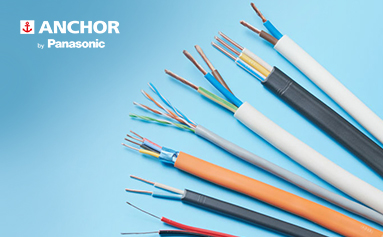
Homeowners frequently get confused about wires and cables since both carry electricity to lights, fans, and appliances in everyday setups, but grasping the difference between wire and cable ensures safer and more reliable installations. When it comes to their various uses, choosing wrongly can lead to overheating, shocks, or fires, especially during the monsoons. The main cable and wire differences boil down to their build and best uses, while they both are great options in specific residential and commercial scenarios. Let us take a closer look at both wires and cables to get a clearer idea of these differences.
What Is a Wire?
A wire features a single copper or aluminium conductor that is wrapped in basic insulation, ideal for straightforward, low-power connections that require decent flexibility. They suit simpler power needs well.
Residential applications:
- They connect wall switches to ceiling lights in bedrooms and living rooms.
- Fans are powered through them in individual circuits.
- Doorbells and low-voltage gadgets run smoothly with wires over short distances.
- Smaller lighting for balconies or verandas use wiring that can easily run through conduits.
Commercial applications:
- Office panels use wiring to reliably feed desk lamps and basic outlets.
- Retail stores use them for display lighting and at counter units.
- Hotels use wires in guest room sockets for charging and powering everyday devices.
What Is a Cable?
A cable is actually multiple insulated wires bundled inside a tough outer sheath for protection, more ideal for high-power or data-heavy runs that face wear and tear. Homes use them for their main power feeds, and businesses depend on them for heavy-duty systems.
Residential applications:
- Main power lines are cables that run many meters long into distribution boards, carrying high currents safely.
- Kitchens power geysers, ovens, and mixers with cables that have thick, heat-resistant layers.
- Underground cables are often used to run garden lights in order to resist moisture and digging damage.
Commercial applications:
- Factories connect heavy machinery and tools to high-voltage supplies with cables.
- Office networks bundle data lines securely within cables for their computers and servers.
- Shopping malls feed escalators and lifts through cables with proper protection.
Key Difference Between Wires and Cables
Structural Differences
Wires use one conductor for basic tasks, whereas cables group several insulated ones under a protective jacket for added durability.
- A wire stays as a single strand, easy to route through tight wall conduits.
- A cable twists multiple cores together, surrounded by a sturdy outer layer.
- Wires come thinner and lighter, perfect for concealed home runs.
- Cables build thicker with sheathing that guards against physical damage.
Functional Differences
Wires excel in short, simple power paths, but cables manage complex, high-capacity, or signal-sensitive jobs reliably.
- Wires power household lights and fans over low-voltage, short distances.
- Cables deliver mains power or data across buildings with minimal loss.
- Wires can handle basic circuits where signal quality matters less.
- Cables help shield against interference for clear transmission in networks.
Safety and Insulation Differences
Wires offer simple PVC covering, while cables provide advanced multi-layer protection against heat, fire, and faults.
- Wires rely on single insulation suitable for low-risk, indoor circuits.
- Cables feature double sheaths and grounding to contain electrical faults.
- Wires risk faster wear under high loads or moisture exposure.
- Cables resist flames and spread slowly if issues arise.
Installation Differences
Wires install quickly in homes, but cables require more planning for commercial strength and scale.
- Wires thread easily through conduits using fish tape by one person.
- Cables unroll from reels and lay in trays with team support.
- Wires join with simple splices or soldered ends.
- Cables seal with glands for waterproof, secure connections.
Cost Comparison
Wires cost less upfront for basic needs, while cables justify higher prices through longevity and capacity.
- Wires keep budgets low for household wiring projects.
- Cables deliver better value over time in demanding setups.
- Wires may need earlier replacement due to thinner protection.
- Cables endure decades with armored resistance to wear.
Aspect | Wires | Cables |
Structural Differences | Single conductor with basic insulation, easy to bend through tight conduits | Multiple insulated conductors inside a protective outer sheath for added durability |
Functional Differences | Best for short, simple low-voltage power paths like lights and fans | Handles complex high-power or data transmission over longer distances reliably |
Safety and Insulation Differences | Basic PVC covering suitable for indoor low-risk circuits | Multi-layer sheathing with grounding and flame resistance for full fault protection |
Installation Differences | Threads easily through walls with simple tape, can be done by one person | Requires reels, trays, and even teams for heavy-duty laying and securing |
Cost Comparison | Lower upfront price, ideal for household budgets | Higher initial cost but better long-term value and lifespan |
Advantages of Using Wires and Cable
Wires and cable work best together, with wires offering affordability and ease for light duties and cables bringing robustness for critical paths.
Wires:
- They can flexibly run around corners easily during home renovations or repairs.
- Their lightweight design lets a single workers handle work and maintenance without strain.
- Lower prices make them ideal for more frequent small-scale upgrades.
Cables:
- Multiple circuits run within one path, cutting down on any wall clutter.
- Built-in shielding keeps any data signals clean and secure over distances.
- Tough sheaths withstand the weather and overheating, as well as rodents.
Conclusion
Learning the difference between wire and cable along with the cable and wire difference simplifies any wiring decisions you will need to make, for homes and offices alike. The main point of your decision centers on your needs. Wires keep simple circuits flowing affordably, while cables help power more demanding residential and commercial needs durably.
FAQs
What is the main difference between wires and cables?
Wires consist of a single conductor suited for basic power delivery, whereas cables bundle multiple insulated conductors inside a protective sheath for more demanding applications. Wires bend easily for low-voltage home runs, while cables offer durability for high-power or data lines.
Where are wires commonly used?
Wires commonly connect switches to lights and power fans or sockets inside residential walls and conduits. Commercial spaces use them for desk lamps and low-draw outlets in offices or shops.
Where are cables commonly used?
Cables run main power from meters to panels in homes and feed heavy kitchen appliances safely. Commercially, they are often used for factory machines, office networks, and hospital emergency lines.
Are cables more durable than wires?
Cables prove more durable thanks to their protective sheaths that resist weather, rodents, and physical wear over time. Wires can wear out quicker under overloads or moisture, having only basic insulation.
Which is safer: wire or cable?
Cables are safer thanks to their multi-layer insulation, grounding, and flame resistance that can contain any faults effectively. Wires are a safe and appropriate option for indoor circuits with lower loads.
Share this post


Select more categories
Share this postX
Category



Download Mobile Apps
- Wizz Smart


- MirAIe
- Anchor Smart Saver
- Anchor Samridhi


